
Explore this Google Ads for Doctors SEO Outline with 15 proven strategies to attract more patients, increase bookings, and grow your medical practice.
1. What is The Google Ads for Doctors SEO Outline?
A Google Ads for Doctors SEO Outline is a strategic framework that combines the power of Google Ads (paid search advertising) with SEO (Search Engine Optimization) to help doctors and medical practices attract more patients online.
In today’s digital healthcare environment, patients often begin their search for medical services on Google by typing queries such as “best cardiologist near me,” “emergency dentist in my area,” or “skin specialist for acne treatment.” A well-planned Google Ads and SEO strategy ensures that a medical practice appears prominently when potential patients are actively looking for healthcare solutions.
Google Ads for Doctors SEO Outline focuses on generating immediate visibility through paid advertisements that appear at the top of Google search results. Doctors can target specific keywords related to their specialties, locations, and services. For example, a dermatologist may run ads for keywords like “laser skin treatment doctor” or “dermatologist consultation near me.”
These advertisements allow healthcare providers to reach high-intent users who are more likely to book appointments. Unlike traditional marketing methods, Google Ads provides measurable results, allowing doctors to track clicks, calls, appointment requests, and overall campaign performance.
SEO, on the other hand, focuses on improving a medical website’s organic ranking in search engine results. A strong doctor SEO strategy includes optimizing website content, improving page speed, creating informative medical articles, building local citations, and enhancing Google Business Profile visibility. While Google Ads provides instant exposure, SEO creates long-term online authority and helps a practice gain consistent visibility without paying for every click.
A complete Google Ads for Doctors SEO outline typically includes several important components. The first step is keyword research, where healthcare-specific search terms are identified based on patient intent.
These keywords help determine which services patients are searching for and how competitive the market is. The next step is to create optimized landing pages that provide clear information about treatments, doctor expertise, patient benefits, and appointment options.
Another important part of the outline is local SEO optimization. Most healthcare searches have local intent, meaning patients usually look for doctors within their city or nearby area. Optimizing location pages, collecting patient reviews, maintaining accurate business information, and improving Google Maps rankings are essential for attracting local patients.
The strategy also includes creating high-quality medical content that builds trust and credibility. Search engines prioritize websites that demonstrate expertise, authority, and trustworthiness (E-E-A-T). Doctors can improve their online reputation by publishing educational articles, answering common patient questions, sharing treatment information, and highlighting professional qualifications.
Tracking and analytics are also essential elements of a successful Google Ads and SEO plan. Medical practices need to monitor important metrics such as cost per lead, conversion rates, keyword performance, website traffic, and appointment bookings. This data helps refine campaigns and ensures marketing budgets are spent effectively.
In simple terms, a Google Ads for Doctors SEO Outline is a roadmap for increasing online visibility, attracting qualified patients, and growing a medical practice through strategic digital marketing.
By combining the immediate results of Google Ads with the sustainable growth of SEO, doctors can build a stronger online presence, compete effectively in their healthcare market, and generate a steady flow of new patient inquiries in 2026 and beyond.
In the competitive healthcare industry, having a strong online presence is no longer optional for doctors and medical practices. Patients increasingly rely on Google to find healthcare providers, research treatments, compare specialists, and decide where to book appointments.
While both Google Ads and SEO are powerful digital marketing strategies, using them together creates a more complete approach that helps doctors attract patients quickly while building long-term visibility and trust.
2. Why Doctors Need Google Ads and SEO Together: Google Ads for Doctors SEO Outline
Google Ads for Doctors SEO Outline provides immediate visibility, allowing doctors to appear at the top of search results as soon as potential patients search for relevant medical services. For example, a patient searching for “orthopedic doctor near me” or “urgent care clinic open today” is likely ready to take action.
Google Ads for Doctors SEO Outline allows medical practices to target these high-intent searches and drive qualified traffic directly to appointment pages, contact forms, or phone calls. This makes paid advertising especially useful for new clinics, competitive specialties, seasonal campaigns, and promoting specific treatments.
However, relying only on Google Ads can become expensive over time because every click requires payment. This is where SEO plays a critical role. Search Engine Optimization helps doctors improve their organic rankings and attract patients without paying for each website visit.
Through optimized medical content, local SEO strategies, technical improvements, and reputation management, healthcare websites can gradually build authority and achieve sustainable search visibility.
Using Google Ads and SEO together creates a balanced marketing strategy. Google Ads for Doctors SEO Outline delivers immediate patient leads while SEO builds a foundation for continuous growth. For example, a newly established medical practice can use Google Ads to generate appointments within days while simultaneously investing in SEO to improve organic rankings over several months. As SEO performance increases, the practice can reduce dependence on paid advertisements while maintaining a steady flow of patient inquiries.
Another major advantage of combining both strategies is better keyword and audience insights. Google Ads campaigns provide valuable data about which keywords generate clicks, calls, and conversions.
Doctors can use this information to improve their SEO content strategy by creating blog posts, service pages, and location-based content around the terms that patients actually search for. Similarly, SEO performance can reveal opportunities for expanding paid campaigns into new areas.
Google Ads and SEO also improve brand credibility when used together. When a medical practice appears multiple times on Google—through paid advertisements, organic search results, Google Maps listings, and informative content—patients are more likely to view that practice as trustworthy and established. Consistent visibility increases brand recognition and helps doctors compete against larger healthcare organizations.
Local visibility is another important reason doctors need both strategies. Most healthcare searches are location-based, such as “dentist near me” or “best dermatologist in London.” Google Ads can instantly place a practice in front of local patients, while local SEO helps improve Google Business Profile rankings, reviews, and map visibility. Together, they maximize opportunities for attracting nearby patients.
In 2026, healthcare marketing success requires more than simply having a website. Doctors need a strategic combination of paid and organic search methods to reach patients at every stage of their decision-making journey. Google Ads captures immediate demand, while SEO creates long-term authority and growth.
By integrating both approaches, medical practices can increase patient acquisition, improve online reputation, and build a stronger digital presence in an increasingly competitive healthcare market.
3. Benefits of Google Ads for Medical Practices
In the modern healthcare industry, attracting new patients requires more than traditional marketing methods. Patients now use search engines like Google to find doctors, compare healthcare providers, and schedule appointments. Google Ads for medical practices provides doctors with a powerful way to connect with potential patients at the exact moment they are searching for healthcare services.
By using targeted paid advertising campaigns, medical professionals can increase visibility, generate qualified leads, and grow their practice more efficiently.
One of the biggest benefits of Google Ads is immediate online visibility. Unlike SEO strategies, which can take months to achieve higher rankings, Google Ads allows medical practices to appear at the top of search results almost instantly.
When a patient searches for terms such as “family doctor near me,” “best dentist in my area,” or “private clinic consultation,” your practice can appear prominently above competitors. This increased visibility helps capture patients who are actively looking for healthcare solutions.
Another major advantage is highly targeted patient acquisition. Google Ads allows doctors to control exactly who sees their advertisements based on factors such as location, age, search keywords, device type, and user behavior.
For example, a cardiologist can target people searching for heart specialists in a specific city, while a cosmetic surgeon can advertise services to users interested in aesthetic treatments. This precise targeting ensures that marketing budgets are focused on potential patients who are more likely to book appointments.
Google Ads for Doctors SEO Outline also provides measurable and trackable results. Medical practices can monitor important performance metrics, including website visits, phone calls, appointment requests, conversion rates, and cost per patient acquisition.
This data allows doctors to understand which advertisements and keywords are producing the best results. Unlike traditional advertising methods such as newspapers or billboards, Google Ads for Doctors SEO Outline provides clear insights into campaign effectiveness and return on investment.
Another benefit is the ability to promote specific medical services. Doctors can create separate campaigns for different treatments, specialties, or patient needs. For example, a dental clinic can run individual ads for dental implants, teeth whitening, emergency dental care, and routine checkups. This approach helps deliver more relevant messages to users and increases the chances of converting searches into appointments.
Google Ads for Doctors SEO Outline is also valuable for competing in crowded healthcare markets. Many medical fields have significant competition, especially in major cities. Even if a practice website does not yet rank highly through SEO, Google Ads allows doctors to compete for visibility against established clinics and larger healthcare organizations. A well-optimized campaign can help smaller practices reach potential patients without waiting years to build organic rankings.
Another important advantage is improving local patient engagement. Most healthcare searches have local intent, meaning patients usually want doctors near their home or workplace. Google Ads for Doctors SEO Outline enables medical practices to target specific geographic areas and attract nearby patients.
Location-based advertising can increase phone calls, directions requests, and appointment bookings from people who are ready to receive care.
Google Ads for Doctors SEO Outline also supports remarketing strategies, allowing medical practices to reconnect with visitors who previously viewed their website but did not schedule an appointment. Through remarketing campaigns, doctors can remind potential patients about their services and encourage them to take the next step.
Overall, Google Ads for Doctors SEO Outline offers medical practices a fast, flexible, and data-driven way to attract new patients. When combined with SEO, content marketing, and local optimization, Google Ads becomes a powerful tool for building a strong online presence.
For doctors looking to expand their patient base in 2026, investing in Google Ads for Doctors SEO Outline can provide immediate growth opportunities while supporting long-term practice success.
4. How SEO Supports Google Ads: Google Ads for Doctors SEO Outline
Google Ads and SEO are often viewed as separate digital marketing strategies, but when used together, they create a stronger and more effective growth system for medical practices. While Google Ads helps doctors gain immediate visibility and attract patients quickly, SEO builds long-term online authority, improves website performance, and increases trust among potential patients.
By combining both strategies, healthcare providers can maximize their online presence and achieve better results from their marketing investments.
One of the main ways SEO supports Google Ads is by improving the overall quality and credibility of a medical website. Google evaluates many factors when determining advertisement performance, including the relevance and usefulness of the landing page.
A website optimized through SEO typically provides a better user experience, faster loading speed, clear navigation, and valuable healthcare information. These improvements can help increase Google Ads performance by creating landing pages that are more relevant to patient searches.
SEO also helps medical practices identify valuable keywords that can improve Google Ads campaigns. Through SEO keyword research, doctors can discover what patients are searching for, including specific treatments, symptoms, and location-based services.
For example, an SEO analysis may reveal that patients frequently search for “affordable Invisalign dentist near me” rather than simply “dentist.” This information can be used to create more targeted Google Ads campaigns that attract higher-quality leads.
Another important benefit is reducing advertising costs over time. Google Ads operates on a pay-per-click model, meaning medical practices pay whenever someone clicks on their advertisement. Strong SEO performance can help a website rank organically for important keywords, reducing the need to rely entirely on paid traffic.
When a medical practice appears in both paid ads and organic search results, it can capture more clicks while potentially lowering overall marketing expenses.
SEO also strengthens patient trust and credibility, which directly influences Google Ads conversions. Healthcare decisions are highly personal, and patients usually research doctors before booking appointments.
A website with informative blog posts, detailed service pages, doctor profiles, patient reviews, and educational resources creates confidence among visitors. When users click a Google Ad and find a trustworthy website, they are more likely to schedule a consultation or contact the practice.
Local SEO is another area where SEO supports Google Ads effectively. Most healthcare searches are location-focused, such as “eye doctor near me” or “urgent care clinic in [city].” Optimizing Google Business Profile listings, local keywords, reviews, and location pages improves visibility in local search results.
This helps Google Ads for Doctors SEO Outline campaigns target nearby patients more effectively and increases the chances of generating real appointments.
SEO data can also improve Google Ads targeting decisions. By analyzing organic search performance, doctors can identify high-performing pages, popular topics, and patient interests.
These insights allow advertisers to create more personalized ad copy and landing pages. For example, if an SEO article about skin allergy treatments receives high traffic, the practice can create a Google Ads campaign promoting allergy consultations.
Additionally, using both SEO and Google Ads helps medical practices dominate more space on search engine results pages (SERPs). When a doctor’s website appears through paid advertisements, organic listings, and local map results, patients are more likely to recognize and trust the brand. Multiple appearances increase visibility and reduce the chances of competitors capturing potential patients.
5. Keyword Research for Doctors
Keyword research is one of the most important steps in creating a successful Google Ads and SEO strategy for doctors. It helps medical practices understand what potential patients are searching for online and allows them to target the right search terms to attract qualified leads.
Without proper keyword research, doctors may spend money on irrelevant advertisements or create website content that does not reach the right audience. A well-planned keyword strategy ensures that every marketing effort is focused on reaching patients who are actively looking for healthcare services.
For medical practices, keyword research begins by identifying the services, treatments, and specialties that patients commonly search for. These keywords can include general healthcare terms, specific treatments, symptoms, and location-based phrases.
For example, a dermatologist may target keywords such as “acne treatment doctor,” “skin specialist near me,” or “laser treatment clinic.” A dentist may focus on terms like “emergency dentist,” “dental implants specialist,” or “teeth whitening near me.” Understanding patient search behavior helps doctors create advertisements and website content that match real patient needs.
One of the most important aspects of keyword research for doctors is identifying high-intent keywords. These are search terms used by people who are more likely to take action, such as booking an appointment or contacting a clinic.
Keywords containing terms like “near me,” “consultation,” “appointment,” “specialist,” “clinic,” or “treatment cost” often indicate stronger patient intent. For example, someone searching for “cardiologist consultation near me” is usually closer to making a healthcare decision compared to someone searching for general information like “what causes heart problems.”
Location-based keywords are especially valuable for medical practices because most patients prefer healthcare providers nearby. Local keyword research helps doctors target specific cities, neighborhoods, and service areas.
Examples include “family doctor in London,” “private clinic Manchester,” or “orthopedic surgeon near Birmingham.” These keywords are essential for both Google Ads campaigns and local SEO strategies because they help attract patients who are geographically close to the practice.
Another important part of keyword research is analyzing search volume and competition. Some keywords may have thousands of searches but also intense competition from hospitals, large healthcare organizations, and established clinics.
Other more specific keywords, known as long-tail keywords, may have fewer searches but higher conversion potential. For example, “doctor” is a broad keyword, while “private diabetes specialist consultation in London” is more specific and likely to attract patients with a clear need.
Negative keyword research is also necessary for successful Google Ads campaigns. Negative keywords prevent advertisements from appearing for irrelevant searches that waste advertising budgets.
For example, a private clinic may exclude terms such as “free,” “course,” “job,” or “training” if those searches are unlikely to generate patients. This helps improve ad efficiency and ensures that marketing funds are spent on valuable traffic.
Keyword research also supports content creation for SEO. Doctors can use keyword insights to develop blog posts, FAQs, treatment pages, and educational resources based on what patients want to know. For example, if many users search for “early signs of diabetes,” a healthcare provider can create an informative article answering that question while promoting relevant medical services.
Regular keyword analysis is important because patient search trends change over time. New treatments, healthcare concerns, and seasonal conditions can influence what people search for online. Monitoring keyword performance allows medical practices to update their Google Ads campaigns and SEO strategies continuously.
In conclusion, keyword research is the foundation of effective digital marketing for doctors. It helps medical practices understand patient behavior, improve Google Ads targeting, increase SEO visibility, and attract more qualified appointment requests. By choosing the right keywords and focusing on patient intent, doctors can build a stronger online presence and grow their practice successfully in 2026.
6. Campaign Structure
A well-organized Google Ads campaign structure for doctors is essential for achieving better performance, controlling advertising costs, and attracting the right patients. A properly planned campaign allows medical practices to target specific services, patient needs, locations, and search behaviors more effectively.
Without a clear structure, advertisements may become difficult to manage, budgets may be wasted, and the practice may miss valuable opportunities to connect with potential patients.
The foundation of a successful medical Google Ads campaign begins with separating campaigns by medical specialty, service, and goal. Instead of placing all keywords into one general campaign, doctors should create individual campaigns for different treatments or departments.
For example, a multi-specialty clinic may create separate campaigns for cardiology, dermatology, dental services, physiotherapy, and general consultations. This approach allows each campaign to have customized keywords, advertisements, budgets, and landing pages that directly match patient searches.
The next important element is organizing ad groups within each campaign. Ad groups should contain closely related keywords and advertisements that focus on a specific patient need. For example, within a dental campaign, you can create separate ad groups for “dental implants,” “emergency dental care,” and “teeth whitening.”
Each ad group should include highly relevant keywords and ad copy that addresses the exact search intent of potential patients. This improves advertisement relevance and can lead to better click-through rates and improved campaign efficiency.
Keyword organization plays a major role in campaign structure. Doctors should divide keywords based on search intent, including informational, commercial, and appointment-focused searches. High-intent keywords such as “book dermatologist appointment” or “private dentist near me” should receive special attention because they are more likely to generate patient inquiries.
Broad keywords may be useful for awareness campaigns, but they often require careful management to avoid attracting irrelevant traffic.
Location targeting is another crucial part of a medical Google Ads campaign structure. Healthcare searches are usually local, so doctors should create campaigns that focus on specific service areas. A clinic operating in multiple cities may create separate location-based campaigns to customize advertisements and budgets for each area. Local targeting helps ensure that ads reach patients who can realistically visit the practice.
Budget allocation should also be carefully planned within the campaign structure. High-value services that generate greater revenue, such as specialist consultations or advanced treatments, may require larger advertising budgets. Campaign performance data should be regularly analyzed to identify which services generate the most appointments and provide the best return on investment.
Landing page organization is another key factor. Each Google Ads campaign should direct users to a dedicated landing page that matches the advertisement and keyword. For example, an ad promoting orthodontic treatment should lead to an orthodontics service page rather than a general clinic homepage. Relevant landing pages improve user experience, increase conversion rates, and help patients quickly find the information they need.
A successful campaign structure also includes tracking and optimization systems. Doctors should set up conversion tracking to measure important actions such as phone calls, appointment bookings, contact form submissions, and consultation requests. This data helps identify which campaigns, keywords, and advertisements are producing actual patient results.
Remarketing campaigns can also be included as part of a complete structure. Many website visitors may research healthcare options before making a decision. Remarketing allows medical practices to reconnect with previous visitors and encourage them to return and schedule an appointment.
In 2026, an effective Google Ads campaign structure is about creating a patient-focused advertising system rather than simply running advertisements. By organizing campaigns by services, keywords, locations, and patient intent, doctors can improve visibility, reduce wasted spending, and attract more qualified patients. A strategic campaign structure combined with SEO creates a powerful foundation for long-term medical practice growth.
7. Landing Page Optimization
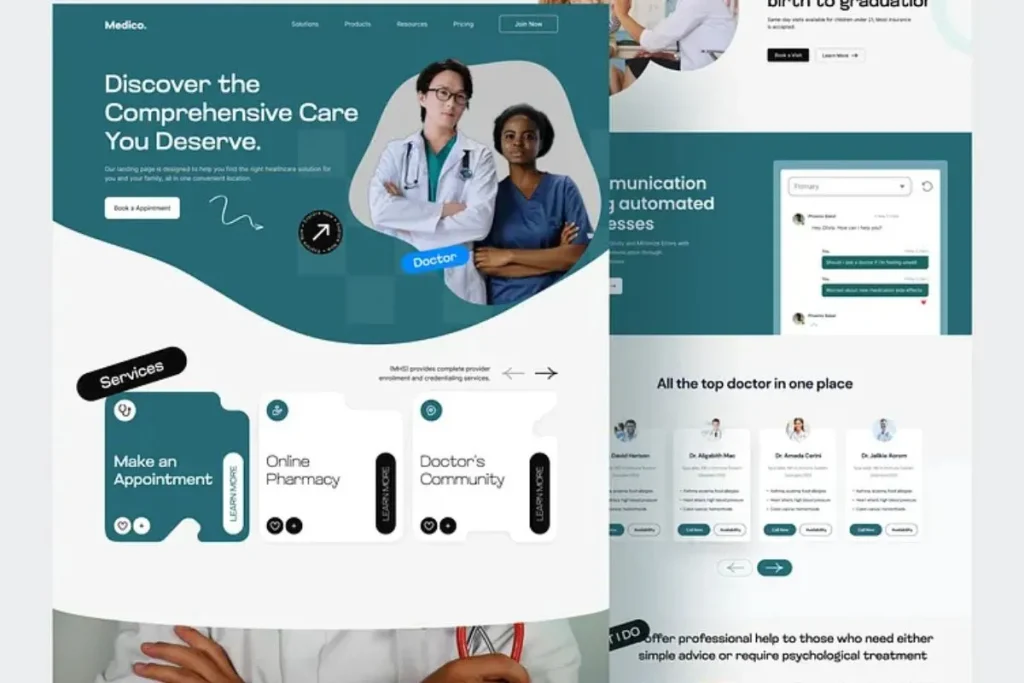
Landing page optimization is one of the most important factors in the success of Google Ads campaigns for doctors. No matter how well-designed your advertisements are, they will not produce consistent results if the landing page fails to convince visitors to take action.
A well-optimized landing page creates a seamless experience between the ad and the information patients expect to find, increasing trust, improving conversion rates, and maximizing the return on your advertising investment.
The first principle of landing page optimization is relevance. Every Google Ad should direct users to a page that closely matches the keyword and advertisement they clicked. For example, if someone searches for “pediatrician near me” and clicks an ad promoting pediatric services, they should land on a dedicated pediatric services page rather than the clinic’s homepage.
This improves user satisfaction and signals to Google that the page is relevant, which can contribute to better ad performance.
A successful landing page should have a clear and compelling headline that immediately tells visitors they are in the right place. The headline should include the primary service and, when appropriate, the location.
For example, “Experienced Family Doctors in Manchester” or “Professional Dental Implant Services in Birmingham” clearly communicates the purpose of the page. Supporting text should briefly explain the benefits of choosing the practice and encourage visitors to continue reading.
Providing valuable and easy-to-understand information is equally important. Patients want answers to their healthcare questions before booking an appointment. The landing page should explain the treatment or service, who it is suitable for, expected benefits, available procedures, and what patients can expect during their visit.
Medical information should be accurate, easy to read, and written in language that non-medical audiences can understand while maintaining professionalism.
Trust is a major factor in healthcare decisions. A high-converting landing page should include credibility elements such as doctor qualifications, years of experience, professional certifications, affiliations with recognized medical organizations, and patient testimonials.
Positive reviews and success stories help reassure visitors that they are choosing a reputable healthcare provider. Displaying awards, accreditations, or certifications can further strengthen patient confidence.
A strong call-to-action (CTA) is another essential component of landing page optimization. Every page should encourage visitors to take the next step, whether that is booking an appointment, requesting a consultation, calling the clinic, or completing an online contact form.
CTAs should be visible throughout the page using action-oriented phrases like “Book Your Appointment Today,” “Schedule a Consultation,” or “Call Our Medical Team.” Contact details should also be easy to find, especially for users browsing on mobile devices.
Since a large percentage of healthcare searches are performed on smartphones, mobile optimization is critical. Landing pages should load quickly, display properly on all screen sizes, and provide an intuitive browsing experience.
Slow-loading pages or complicated navigation can increase bounce rates and reduce conversions. Compressing images, minimizing unnecessary scripts, and using responsive web design all contribute to better performance.
Another important aspect is local optimization. Including the clinic’s address, phone number, office hours, service areas, and an embedded Google Map helps patients quickly locate the practice. Local information also supports local SEO efforts and improves relevance for geographically targeted Google Ads campaigns.
Technical optimization should not be overlooked. Landing pages should use secure HTTPS connections, fast-loading infrastructure, optimized images, and clear page structures.
They should also include relevant keywords naturally within headings, subheadings, and body content without excessive repetition. These improvements enhance both user experience and search engine visibility.
Finally, landing page optimization is an ongoing process. Doctors should regularly monitor performance metrics such as bounce rate, average time on page, conversion rate, and form completion rate.
A/B testing different headlines, CTAs, layouts, and images can reveal which variations produce the best results. Continuous testing and refinement help improve patient engagement and maximize advertising effectiveness.
In 2026, landing page optimization remains a critical component of successful Google Ads campaigns for medical practices. By creating relevant, trustworthy, mobile-friendly, and conversion-focused landing pages, doctors can turn more website visitors into patients while improving campaign performance and achieving sustainable practice growth.
8. Local SEO Strategy
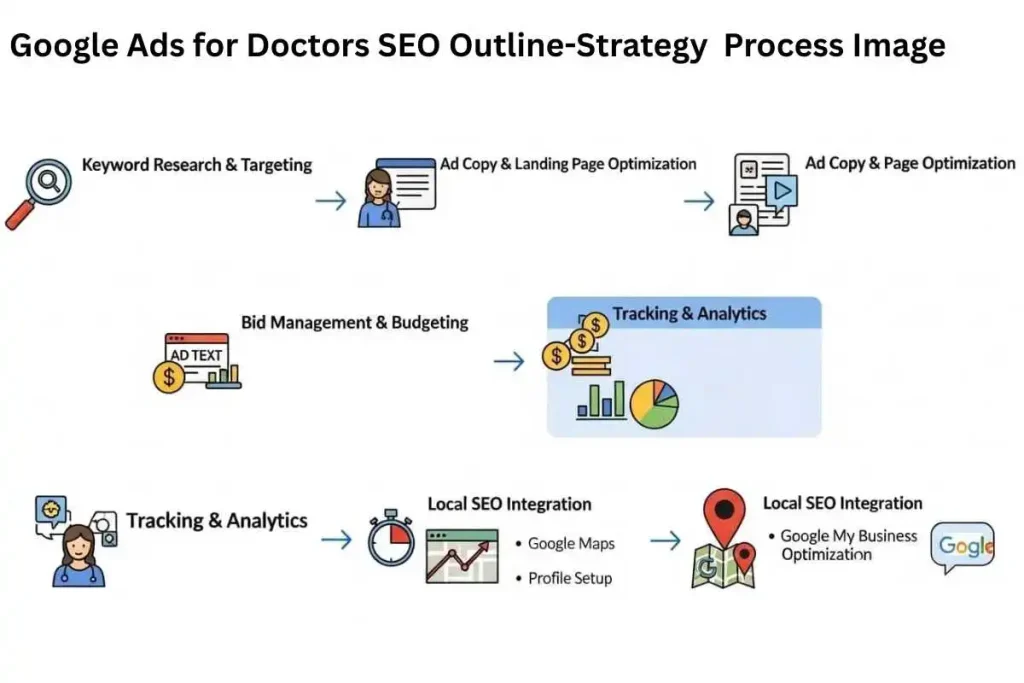
For doctors and medical practices, local SEO is one of the most powerful ways to attract nearby patients who are actively searching for healthcare services. While Google Ads for Doctors SEO Outlinecan immediately place your practice at the top of search results, local SEO helps build long-term visibility and trust.
A strong local SEO strategy ensures that your medical practice appears when potential patients search for doctors, clinics, specialists, or healthcare services in their area.
The foundation of local SEO begins with optimizing your Google Business Profile (GBP). Your Google Business Profile is often the first thing patients see when they search for a doctor near them. Make sure your profile includes accurate information such as your practice name, address, phone number, business hours, website link, medical specialties, and services offered.
Adding high-quality photos of your clinic, staff, and facilities can also improve patient confidence and engagement.
Another important factor is maintaining consistent NAP information (Name, Address, and Phone number) across all online platforms. Search engines use this information to verify the credibility of your medical practice. Any differences between your website, directories, and social media profiles can reduce your local ranking and make it harder for patients to find accurate information.
Patient reviews play a major role in local SEO success. Positive reviews not only improve your reputation but also influence Google’s local search rankings. Encourage satisfied patients to leave honest reviews on your Google Business Profile and respond professionally to all feedback. A practice that actively manages reviews appears more trustworthy and patient-focused.
Your website should also be optimized for local search terms. Instead of targeting only broad keywords like “cardiologist” or “dentist,” use location-based keywords such as “cardiologist in London” or “family doctor near Manchester.” Creating dedicated service pages for different treatments and locations can help your practice rank for more specific searches.
Local content marketing is another effective strategy. Publishing helpful articles about common health concerns, local health trends, treatment options, and frequently asked patient questions can increase organic traffic.
For example, a dermatologist can create content about “best acne treatment options in Birmingham” or “how to protect skin during summer in the UK.” This type of content attracts local patients while demonstrating medical expertise.
Local citations and healthcare directories also support stronger search visibility. Listing your practice on trusted platforms such as medical directories, healthcare websites, and local business directories helps search engines confirm your legitimacy. These mentions can improve your authority and increase opportunities for patients to discover your services.
Integrating local SEO with Google Ads creates an even stronger marketing strategy. While Google Ads provides immediate visibility for targeted searches, local SEO builds organic authority and reduces dependence on paid advertising over time.
For example, a patient may first discover your clinic through an advertisement but later choose your practice because they see strong reviews, accurate information, and helpful local content.
Mobile optimization is also essential for local SEO because many patients search for healthcare providers using smartphones. Your website should load quickly, be easy to navigate, and include clear contact options such as click-to-call buttons and online appointment booking.
In 2026, successful medical marketing requires a combination of paid advertising and strong local search presence. By optimizing your Google Business Profile, collecting patient reviews, creating location-focused content, and maintaining accurate online information, your practice can improve visibility, attract more local patients, and build lasting trust within your community.
9. Google Business Profile Optimization
A well-optimized Google Business Profile (GBP) is one of the most powerful tools doctors can use to attract more patients through local search. When people search for healthcare services such as “dentist near me,” “family doctor nearby,” or “best dermatologist in [city],”
Google Business Profile listings often appear at the top of search results. For medical practices, optimizing this profile helps improve online visibility, build patient trust, and increase appointment bookings.
Google Business Profile optimization begins with ensuring that all practice information is accurate and complete. Doctors should provide essential details such as the clinic name, address, phone number, website URL, working hours, and medical specialties.
Inaccurate or outdated information can confuse potential patients and reduce credibility. A complete profile signals to Google that the practice is reliable, increasing the chances of appearing in local search results.
Choosing the correct primary and secondary categories is another important part of GBP optimization. Doctors should select the category that best represents their main service, such as “Physician,” “Dentist,” “Dermatologist,” “Pediatrician,” or another relevant healthcare category.
Additional categories can be used to highlight other services offered by the practice. Proper categorization helps Google understand the business and match it with relevant patient searches.
A strong business description also plays an important role in attracting potential patients. Doctors should write a clear, patient-focused description that explains their expertise, services, experience, and the benefits patients can expect. Instead of simply listing medical terms, the description should naturally include relevant keywords that patients commonly search for, such as specific treatments, conditions treated, and location-based phrases.
Adding high-quality photos and videos can significantly improve engagement with a Google Business Profile. Healthcare providers should upload professional images of the clinic, medical equipment, reception area, staff members, and treatment facilities.
Visual content helps patients feel more comfortable before visiting the practice and creates a stronger sense of trust. Regularly updating photos also shows Google that the profile is active and maintained.
Patient reviews are one of the most influential factors in local SEO for doctors. Positive reviews help improve rankings while also influencing potential patients’ decisions. Doctors should encourage satisfied patients to share honest feedback about their experiences.
Responding professionally to reviews—both positive and negative—demonstrates that the practice values patient relationships and cares about service quality.
Google Posts are another useful feature that many medical practices overlook. Doctors can use posts to share important updates, health tips, new services, appointment availability, seasonal reminders, or educational content.
Regular posts keep the profile active and provide additional opportunities to engage with potential patients.
Another key optimization strategy is adding detailed service information. Doctors should list specific treatments, procedures, and healthcare services offered at their practice. Each service should include a clear description explaining how it helps patients.
This improves search relevance and allows potential patients to understand whether the clinic provides the care they need.
Appointment links should also be added to make scheduling easier. Many patients prefer quick and convenient booking options, especially when searching from mobile devices. A direct appointment button reduces barriers and increases the likelihood that website visitors will become actual patients.
For doctors investing in Google Ads for Doctors SEO Outline, an optimized Google Business Profile provides additional benefits. Local search visibility, strong reviews, accurate information, and patient engagement can improve overall campaign performance.
When users see consistent information across Google Ads, the website, and the business profile, they are more likely to trust the practice and schedule an appointment.
Overall, Google Business Profile optimization is an essential part of a successful SEO strategy for doctors. By maintaining accurate information, collecting reviews, sharing valuable content, and improving patient engagement, medical practices can increase local visibility and attract more qualified patients searching for healthcare services.
10. Medical Schema Markup
Medical Schema Markup is an important technical SEO strategy that helps doctors and healthcare practices improve their visibility in search engine results. It is a type of structured data added to a website that helps search engines better understand the information about a medical practice, healthcare provider, services, and patient resources.
For doctors using Google Ads and SEO together, implementing medical schema markup can improve search appearance, increase credibility, and support better patient acquisition.
Search engines like Google use complex algorithms to understand website content. However, healthcare websites often contain detailed information about medical specialties, treatments, doctors, locations, and services.
Schema markup provides additional context by organizing this information in a language that search engines can easily interpret. This allows Google to display more relevant information when potential patients search for healthcare services.
For medical practices, several types of schema markup can be useful. The most important one is MedicalOrganization Schema, which helps identify a healthcare facility, clinic, or hospital.
This markup can include important details such as the practice name, address, phone number, opening hours, website URL, and medical specialties. Accurate implementation helps search engines associate the website with a legitimate healthcare provider.
Doctors can also use Physician Schema Markup to highlight individual healthcare professionals. This allows search engines to understand information such as the doctor’s name, qualifications, specialty, education, areas of expertise, and affiliated medical organizations.
When patients search for a specific type of doctor, structured data can help improve the relevance of search results.
Another valuable schema type is MedicalService Schema, which helps practices highlight specific treatments and procedures they offer. For example, a dermatology clinic can use schema markup to describe services such as acne treatment, skin cancer screening, or cosmetic procedures.
A dental practice can highlight services like teeth cleaning, implants, or orthodontic treatments. This improves the chances of appearing for specific patient searches.
Location-based schema is especially important for doctors because most healthcare searches have local intent. Adding LocalBusiness Schema with accurate address details, phone numbers, and operating hours helps Google connect the practice with nearby patients.
This works alongside Google Business Profile optimization and local SEO strategies to improve visibility in location-based searches.
Medical schema markup can also enhance search result appearance through rich results. Rich results provide users with additional information directly on the search page, such as business details, reviews, services, or appointment-related information.
A more informative search listing can attract more clicks compared to standard results, increasing opportunities for new patient appointments.
For healthcare providers running Google Ads campaigns, schema markup provides additional SEO benefits that support paid advertising efforts. When patients see consistent information across Google Ads, landing pages, and organic search results, trust increases.
A strong online presence improves brand credibility and can lead to higher engagement and conversion rates.
Implementing medical schema markup requires accuracy because healthcare information is sensitive and must follow Google’s guidelines. Incorrect or misleading structured data can create confusion and may negatively impact search performance.
Doctors should ensure that all details match the information displayed on their website, Google Business Profile, and other online platforms.
Regular updates are also necessary to maintain effective schema markup. If a doctor changes clinic hours, adds new services, moves locations, or updates professional information, the structured data should be updated accordingly. Keeping schema information current helps search engines provide accurate information to potential patients.
In today’s competitive healthcare market, medical schema markup is a valuable tool for improving online visibility. When combined with Google Ads, local SEO, and a well-optimized website, structured data helps doctors create a stronger digital presence, reach more patients, and increase appointment opportunities.
By making healthcare information easier for search engines to understand, medical practices can improve their chances of appearing in front of the right patients at the right time.
11. HIPAA Compliance
HIPAA compliance is an essential consideration for doctors and healthcare practices that use digital marketing strategies such as Google Ads for Doctors SEO Outline. The Health Insurance Portability and Accountability Act (HIPAA) establishes standards designed to protect patients’ sensitive health information and ensure that healthcare organizations handle personal data securely.
As more patients search for doctors online and interact with medical websites, maintaining HIPAA compliance has become a critical part of building trust and protecting patient privacy.
For healthcare providers running Google Ads campaigns, HIPAA compliance affects how patient information is collected, stored, and used. Unlike many other industries, medical practices must be extremely careful when using tracking tools, contact forms, appointment systems, and remarketing strategies.
Any digital marketing activity involving protected health information (PHI) must follow appropriate privacy and security practices.
One of the most important areas of HIPAA compliance for medical websites is protecting patient data through secure communication methods. Doctor websites often include contact forms where patients submit information about symptoms, medical concerns, insurance details, or appointment requests.
These forms should use secure technology, encryption, and proper data handling procedures to reduce the risk of unauthorized access.
Healthcare practices should also carefully review their use of website tracking tools. Platforms such as Google Analytics, advertising pixels, and third-party marketing software can collect visitor information.
Doctors must ensure that any tracking technology used on their website does not improperly collect or share protected health information. Proper configuration, privacy settings, and compliance reviews are necessary to maintain patient confidentiality.
Google Ads for Doctors SEO Outline for doctors should focus on attracting potential patients without exposing private medical information. Advertisements should avoid making assumptions about a person’s health condition or using sensitive personal information for targeting purposes.
For example, ads should not imply that a specific user has a particular medical condition. Instead, campaigns should use general healthcare keywords related to services, treatments, and specialties.
Landing pages connected to Google Ads for Doctors SEO Outline must also follow HIPAA best practices. These pages should provide clear information about medical services while using secure appointment request systems.
Healthcare providers should avoid collecting unnecessary patient information and should request only the details required for scheduling or communication.
Another important aspect of HIPAA compliance is choosing reliable third-party vendors. Doctors often work with appointment scheduling platforms, customer relationship management (CRM) systems, email marketing tools, and website providers.
If these services handle protected health information, healthcare organizations should ensure that appropriate agreements, such as Business Associate Agreements (BAAs), are in place.
Patient reviews and testimonials require special attention as well. While positive reviews can improve local SEO and attract new patients, doctors must respect patient privacy when sharing testimonials.
Healthcare providers should obtain proper permission before publishing any patient-related information, images, or success stories. Protecting patient confidentiality should always come before marketing goals.
HIPAA compliance also supports a stronger online reputation. Patients are more likely to trust healthcare providers that demonstrate professionalism, security, and respect for privacy.
A secure website, transparent privacy policies, and responsible digital marketing practices help create confidence among potential patients.
For doctors investing in SEO and Google Ads, HIPAA compliance should be integrated into every stage of their marketing strategy. From keyword selection and advertising content to website design and appointment systems, every element should prioritize patient privacy and security.
Ultimately, HIPAA compliance is not just a legal requirement—it is a foundation for successful healthcare marketing. By protecting patient information while maintaining effective digital strategies, doctors can build trust, improve online visibility, and attract more patients through ethical and secure marketing practices.
12. Budget Planning
Budget planning is one of the most important aspects of running successful Google Ads for Doctors SEO Outline. Healthcare marketing can be highly competitive, with many medical practices competing for the same patients and keywords.
Without a clear budget strategy, doctors may spend too much on ineffective campaigns or miss opportunities to attract valuable patients. A well-planned Google Ads budget helps medical practices maximize their return on investment (ROI), control advertising costs, and generate more appointment bookings.
The first step in budget planning is understanding the campaign goals. Doctors should define what they want to achieve before allocating money to advertising. Common goals include increasing phone calls, generating appointment requests, promoting specific medical services, attracting new patients, or improving brand awareness.
Each goal requires a different approach and budget allocation. For example, a clinic launching a new treatment service may need a higher initial budget to increase visibility and compete with established providers.
Keyword competition plays a major role in determining Google Ads for Doctors SEO Outline. Healthcare-related keywords are often highly competitive because each new patient can represent significant long-term value for a medical practice.
Keywords such as “emergency doctor near me,” “dentist in [location],” or “skin specialist near me” may have higher cost-per-click (CPC) rates compared to general keywords. Doctors should research keyword costs and prioritize terms that attract patients with strong booking intent.
Location targeting is another important factor in medical advertising budgets. Most healthcare practices serve patients within a specific geographic area, so focusing ads on relevant locations helps prevent wasted spending.
Instead of showing ads nationwide, doctors can target specific cities, neighborhoods, or service areas where potential patients are most likely to visit. This allows practices to spend their budget more efficiently.
A successful budget plan should also consider the patient acquisition cost. Doctors should calculate how much they are willing to spend to gain one new patient. For example, if a new patient typically generates significant revenue through consultations, treatments, or ongoing care, investing more in Google Ads may be financially beneficial. Understanding the lifetime value of patients helps practices make smarter advertising decisions.
Campaign structure also influences budget efficiency. Google Ads for Doctors SEO Outline should separate campaigns based on specialties, services, and patient needs. For example, a dental clinic may create separate campaigns for implants, teeth whitening, emergency dental care, and general checkups. This approach allows better control over spending and helps identify which services generate the best results.
Regularly monitoring and adjusting the budget is essential for long-term success. Google Ads performance should be reviewed based on important metrics such as click-through rate (CTR), conversion rate, cost per appointment request, and return on ad spend (ROAS).
If certain keywords or ads are generating quality leads, more budget can be allocated to those areas. Underperforming campaigns should be optimized or reduced to avoid unnecessary expenses.
Google Ads for Doctors SEO Outline should also reserve part of their budget for testing and improvement. Successful advertising requires continuous optimization, including testing different ad messages, landing pages, keywords, and audience targeting strategies. Small adjustments can significantly improve campaign performance over time.
Combining Google Ads with SEO can also make budget planning more effective. While paid ads provide immediate visibility, SEO builds long-term organic traffic. A balanced strategy allows doctors to attract patients quickly through advertising while reducing dependency on paid clicks over time.
Overall, effective budget planning helps doctors achieve better results from Google Ads for Doctors SEO Outline. By setting clear goals, understanding patient value, targeting the right audience, monitoring performance, and continuously optimizing campaigns, medical practices can make every advertising dollar more valuable.
A strategic budget approach not only increases appointment opportunities but also creates sustainable growth for healthcare businesses.
13. Conversion Tracking
Conversion tracking is a crucial part of running successful Google Ads for Doctors SEO Outline because it helps medical practices understand whether their advertising efforts are actually generating patient appointments.
Simply receiving website visitors or clicks does not guarantee campaign success. Doctors need to know which ads, keywords, and marketing strategies are bringing real patients to their practice. Conversion tracking provides valuable insights that allow healthcare providers to improve campaign performance, reduce wasted spending, and increase return on investment.
In Google Ads for Doctors SEO Outline, a conversion refers to a valuable action taken by a potential patient after interacting with an advertisement. For medical practices, conversions can include appointment bookings, phone calls, contact form submissions, consultation requests, online chat interactions, or clicks on important website buttons.
Tracking these actions helps Google Ads for Doctors SEO Outline measure the effectiveness of their campaigns beyond basic traffic numbers.
One of the most important conversions for doctors is phone call tracking. Many patients prefer calling a medical office directly rather than completing an online form, especially when they need urgent care or have questions about services.
By tracking calls generated from Google Ads for Doctors SEO Outline, healthcare providers can identify which campaigns and keywords are producing high-quality patient inquiries. This information helps optimize advertising budgets toward strategies that generate more appointments.
Appointment form tracking is another essential component of conversion measurement. Many medical websites include online booking forms where patients can request consultations or schedule visits.
By tracking completed forms, doctors can understand how many users move from clicking an advertisement to taking a meaningful action. This allows practices to evaluate the effectiveness of their landing pages and improve the patient booking experience.
Google Ads for Doctors SEO Outline conversion tracking also helps identify the most valuable keywords. Healthcare advertising often involves many different search terms, but not every click leads to a patient appointment.
Some keywords may generate large amounts of traffic but few conversions, while others may attract fewer visitors but produce more qualified patients. By analyzing conversion data, doctors can focus their budget on keywords that provide better results.
Landing page performance is another area where conversion tracking provides valuable information. A well-designed healthcare landing page should make it easy for patients to understand services, trust the provider, and take action.
Tracking conversions helps identify whether visitors are completing desired actions or leaving without contacting the practice. If conversion rates are low, doctors can improve page content, design, loading speed, or appointment options.
For medical practices, accurate conversion tracking requires proper technical setup. Tools such as Google Tag Manager, Google Analytics, and Google Ads conversion tracking can be used to monitor important patient actions.
Healthcare providers should ensure that tracking methods follow privacy regulations and do not collect unnecessary protected health information. Data security and patient confidentiality should always remain a priority.
Conversion tracking also supports smarter budget decisions. Instead of spending money based only on clicks and impressions, doctors can evaluate the actual results generated by their campaigns.
For example, if one advertising campaign produces more consultation requests at a lower cost, more budget can be allocated to that campaign. This data-driven approach helps improve overall marketing efficiency.
Another advantage of conversion tracking is the ability to use automated bidding strategies in Google Ads. When Google understands which clicks lead to valuable patient actions, its algorithms can optimize campaigns to find more users who are likely to convert. This can improve campaign performance and help doctors attract more qualified leads.
Ultimately, conversion tracking is the foundation of successful Google Ads for Doctors SEO Outline. It provides clear insights into patient behavior, advertising performance, and marketing effectiveness.
By accurately measuring calls, bookings, and inquiries, healthcare practices can make informed decisions, optimize campaigns, and generate more patient appointments while using their advertising budget more efficiently.
14. Measuring Success
Measuring success is a critical part of any Google Ads for Doctors SEO Outline because it helps determine whether marketing efforts are producing meaningful results. In healthcare advertising, success is not only about getting more clicks or website visitors.
The real goal is to attract qualified patients, increase appointment bookings, and achieve sustainable growth for the medical practice. By tracking the right performance metrics, doctors can understand campaign effectiveness and make informed decisions to improve results.
One of the most important factors in measuring Google Ads for Doctors SEO Outline success is tracking conversions. A conversion represents a valuable action taken by a potential patient, such as booking an appointment, calling the clinic, submitting a contact form, or requesting a consultation.
Conversion data provides a clearer picture of Google Ads for Doctors SEO Outline performance because it shows whether advertisements are actually generating patient opportunities rather than simply increasing website traffic.
Cost per conversion is another important metric for doctors to monitor. This measures how much money is spent to generate one patient inquiry or appointment request. Understanding cost per conversion helps medical practices evaluate whether their advertising budget is being used efficiently.
If a campaign generates many leads at a reasonable cost, it may be worth increasing investment. However, campaigns with high costs and low results may require optimization.
Return on investment (ROI) is one of the most valuable measurements for healthcare advertising. Doctors should compare the cost of their Google Ads campaigns with the revenue generated from new patients.
For example, if a dental practice spends money on advertising and gains multiple patients who require ongoing treatments, the campaign may provide significant long-term value. Measuring ROI helps healthcare providers understand the true financial impact of their marketing efforts.
Click-through rate (CTR) is another useful performance indicator. CTR shows the percentage of users who click on an advertisement after seeing it. A higher CTR usually indicates that the ad message, keywords, and targeting are relevant to potential patients. If CTR is low, doctors may need to improve their ad copy, adjust keyword targeting, or create more compelling offers.
Conversion rate is equally important because it measures how many website visitors complete a desired action. A medical website may receive thousands of visitors, but if only a small percentage contact the practice, improvements may be needed. Optimizing landing pages, improving calls to action, simplifying appointment forms, and building trust through patient-focused content can help increase conversion rates.
Patient quality should also be considered when evaluating Google Ads for Doctors SEO Outline success. Not every lead has the same value. A campaign that generates fewer but highly interested patients may be more successful than one that produces many low-quality inquiries. Google Ads for Doctors SEO Outline should analyze whether leads are turning into actual appointments and long-term patients.
Tracking performance by service type can provide additional insights. Many medical practices offer multiple services, and some may generate better results than others. For example, a clinic may discover that advertising for specialized treatments produces more appointments than general healthcare searches. This information allows doctors to allocate budgets toward the services with the highest potential.
Google Ads for Doctors SEO Outline reporting tools provide detailed information about campaign performance, including keyword results, audience behavior, device performance, and geographic data. Reviewing these reports regularly helps identify opportunities for improvement and ensures that advertising strategies remain aligned with patient needs.
Success measurement should also include long-term goals such as brand visibility and patient trust. Consistent advertising combined with SEO, positive reviews, and a strong online presence helps create lasting growth for healthcare practices.
Ultimately, measuring success in Google Ads for Doctors SEO Outline requires looking beyond clicks and impressions. By focusing on conversions, cost efficiency, ROI, patient quality, and continuous optimization, medical practices can create more effective campaigns that attract the right patients and generate more appointment opportunities. A data-driven approach ensures that every advertising investment contributes to measurable business growth.
15. Conclusion
Google Ads for Doctors SEO Outline is a powerful digital marketing strategy that can help medical practices increase visibility, attract new patients, and generate more appointment bookings. However, successful healthcare advertising requires more than simply creating ads and spending money.
A complete approach that combines keyword research, campaign optimization, landing page improvements, local SEO, Google Business Profile optimization, conversion tracking, and performance measurement is essential for achieving long-term results.
Patients today rely heavily on online searches when choosing healthcare providers. Whether they are looking for a nearby doctor, a specialist, or a specific medical service, appearing in front of them at the right moment can significantly impact appointment growth. Google Ads allows doctors to reach these high-intent patients quickly, while SEO strategies help build lasting online authority and trust.
A successful Google Ads campaign begins with understanding patient behavior and targeting the right keywords. Doctors should focus on search terms that reflect real patient needs and create advertisements that clearly communicate their expertise, services, and value. Optimized landing pages, easy appointment options, and strong calls to action further improve the chances of converting visitors into patients.
At the same time, healthcare providers must prioritize trust, privacy, and compliance. Maintaining HIPAA compliance, protecting patient information, and providing accurate online information are essential for building credibility in the healthcare industry. A professional digital presence reassures potential patients that they are choosing a reliable and trustworthy medical provider.
Budget management and conversion tracking also play a major role in campaign success. By analyzing important metrics such as cost per appointment, conversion rates, return on investment, and patient quality, doctors can make smarter marketing decisions.
Regular monitoring and optimization ensure that advertising budgets are spent effectively and continue to deliver measurable results.
Google Ads for Doctors SEO Outline should not be viewed as a short-term advertising expense but as a strategic investment in practice growth. When combined with strong SEO foundations, positive patient reviews, optimized business profiles, and valuable healthcare content, paid advertising can create a consistent flow of new patient opportunities.
The healthcare industry is becoming increasingly competitive, and having a strong online presence is no longer optional. Doctors who invest in effective Google Ads strategies can improve their visibility, connect with more patients, and stay ahead of competitors in their local markets.
Ultimately, the goal of Google Ads for Doctors SEO Outline is simple: to connect the right patients with the right healthcare providers at the right time. With careful planning, continuous improvement, and a patient-focused approach, medical practices can achieve greater online success, increase appointment bookings, and build long-term relationships with the communities they serve.
For more information: Click Here
What is Google Ads for Doctors?
Google Ads for Doctors is a paid advertising platform that helps medical practices appear at the top of Google search results, making it easier to attract new patients searching for healthcare services.
Should doctors use Google Ads and SEO together?
Yes. Google Ads provides immediate visibility and patient leads, while SEO builds long-term organic traffic and online authority. Combining both strategies delivers the best marketing results.
How much should doctors spend on Google Ads?
The ideal budget depends on your specialty, location, competition, and patient acquisition goals. Start with a manageable monthly budget and optimize campaigns based on conversion data.
How can local SEO improve a doctor’s Google Ads performance?
Local SEO strengthens your online presence through an optimized Google Business Profile, local keywords, and patient reviews, which improves trust and increases the effectiveness of Google Ads campaigns.
How do doctors measure the success of Google Ads campaigns?
Success is measured using key metrics such as appointment bookings, phone calls, conversion rate, cost per lead (CPL), click-through rate (CTR), and return on investment (ROI).