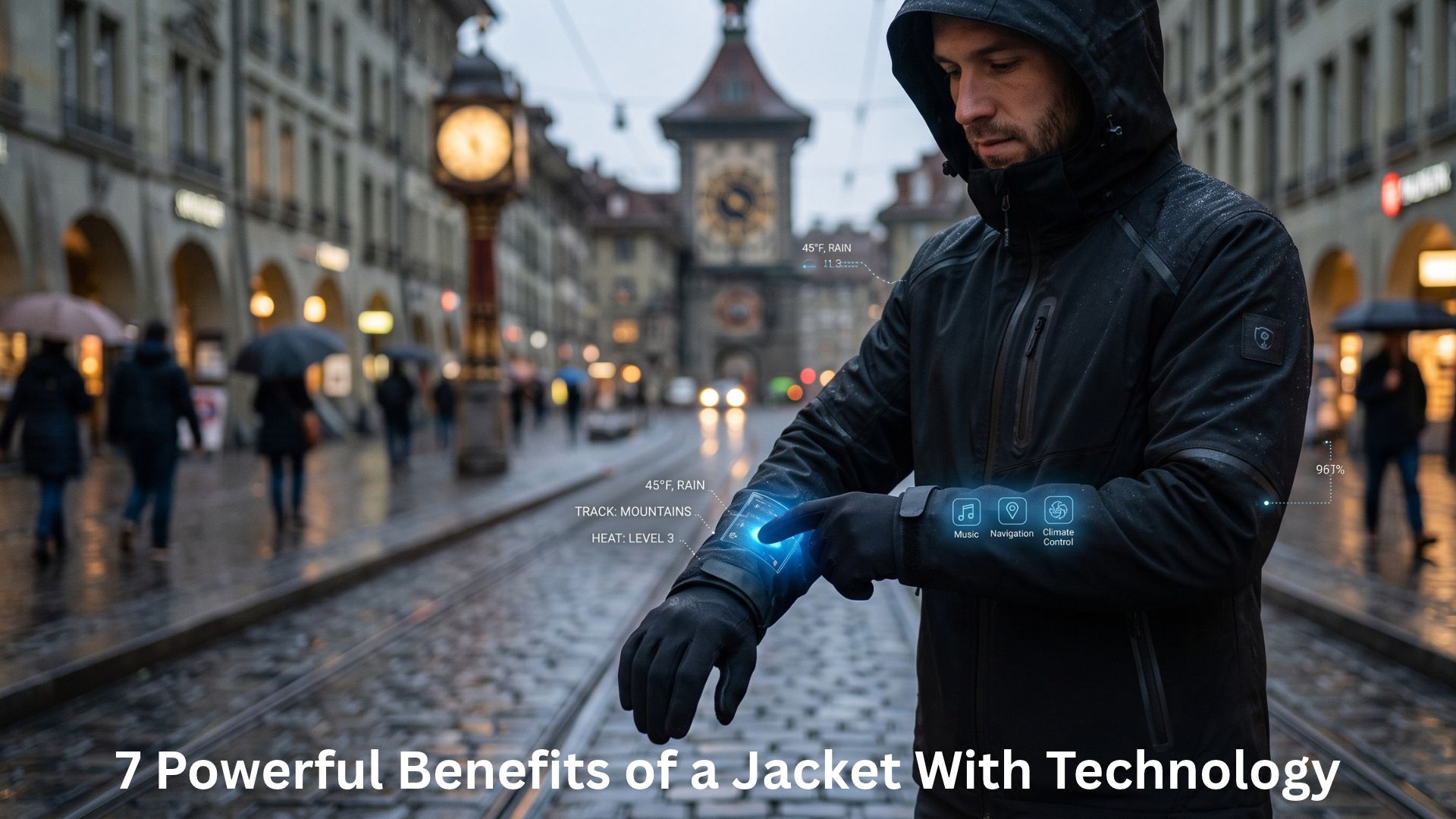
Explore 7 powerful benefits of a jacket with technology, from AI and smart sensors to heating, safety, connectivity, and sustainable design.
Technology is changing how people live and work. It’s also changing the clothes we wear. A tech-enabled jacket combines everyday clothing with smart materials, electronics, sensors, and wireless connections. These features can make jackets more comfortable, useful, and safe.
Unlike regular jackets, which mainly protect us from cold, wind, and rain, smart jackets can do much more. Some have electric heating, temperature control, smartphone connections, and activity tracking. New designs may also use artificial intelligence (AI), safety alerts, and energy-saving fabrics.
As technology improves, smart jackets are becoming more useful for many people. They can help office workers, travelers, outdoor lovers, and factory workers. These jackets offer extra features that make everyday life easier and more comfortable
1. What Defines a True “Jacket with Technology”?
A jacket with technology uses smart materials, electronic systems, sensors, or connected features to do more than ordinary clothing. As technology improves, smart jackets are becoming more useful for many people. So, a jacket with technology is in demand nowadays.
Depending on its design, a jacket with technology may include temperature sensors, heating elements, conductive threads, motion detectors, Bluetooth connectivity, or removable electronic modules. Some garments connect to smartphone apps, letting users control supported features without interacting directly with the electronics is a jacket with technology.
The term can also describe clothing that uses advanced materials to regulate warmth, improve durability, or respond to changing environmental conditions. However, not every jacket with technology is smart. Some products focus on performance fabrics, while others incorporate active electronic functions.
A technology-enabled jacket is defined by materials or electronic systems that add functionality conventional outerwear typically lacks.
2. How Does a Smart Jacket Work?
A smart jacket with technology works by using three main parts: sensors, a control system, and an action system.
First, the sensors collect information about the wearer’s body movements or the weather. Next, the control system checks this information and decides what to do. Finally, the jacket takes action. For example, it may change the heating level, send information to a smartphone, or give a safety alert.
For example, a heated jacket uses a battery to produce heat. The wearer can control the heat with a button or an electronic controller. A more advanced jacket with technology may use temperature sensors to adjust the heat automatically.
Some smart jackets can also connect to smartphones. Users can use a mobile app to change settings, receive alerts, or check activity information.
The way a smart jacket works depends on its design. Some jackets use simple electronic controls, while others use multiple sensors and specialized software to offer more advanced features.
3. Key Technologies Used in Smart Jackets
A. Smart Fabrics and Conductive Fibers
Smart fabrics are a key part of wearable technology because they integrate electronic functionality into textiles.
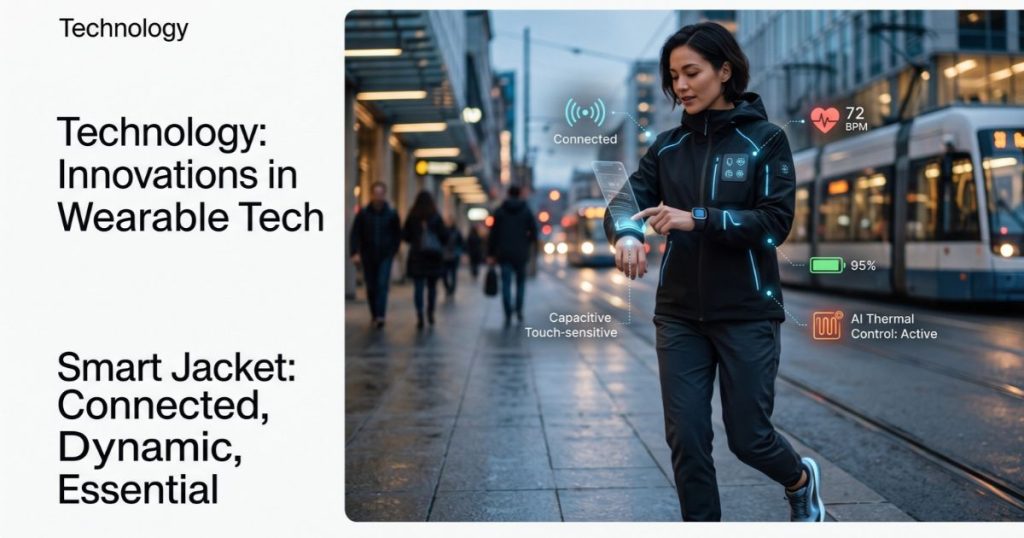
Conductive fibers and specialized threads can carry electrical signals through selected areas of a garment. This enables touch-sensitive sleeves, integrated sensor connections, and interactive fabric surfaces.
Instead of placing every control inside a separate plastic device, designers can incorporate certain functions into the textile itself. This approach may help make wearable electronics more comfortable and less intrusive.
Potential applications include touch-based controls, movement detection, temperature sensing, and integrated lighting. However, the durability, flexibility, and washability of these materials depend on how they’re constructed and how they’re intended to be used.
B. Smart Heating and Temperature Regulation
Temperature management is one of the most practical applications of a jacket with technology.
Heated jackets typically use electrical heating elements powered by rechargeable batteries. Users can adjust the warmth according to the weather and their activity level.
More advanced designs may combine temperature sensors with automatic controls. Such systems could help regulate heating as environmental conditions or body activity change.
For example, a person standing outdoors in cold weather may need more warmth than someone walking quickly. An adaptive system could potentially respond to these differences rather than relying entirely on manual adjustments.
Researchers are also exploring ways to combine electronic heating with breathable materials and improved insulation. These developments may help balance warmth, moisture management, and comfort.
C. Artificial Intelligence in Smart Jackets
Artificial intelligence could make future smart jackets more responsive to individual needs.
An AI-assisted system could analyze environmental temperature, movement, activity patterns, and user-selected preferences. Based on the available data, it might recommend or adjust certain settings.
Imagine a hiker whose activity changes throughout the day. During a steep climb, the person may generate more body heat. During a rest break, the need for insulation may increase. A sufficiently capable adaptive garment could help manage these changing conditions.
However, AI integration should be considered carefully. Not every smart jacket uses artificial intelligence, and many advanced adaptive clothing concepts remain experimental. Practical performance depends on sensor quality, control software, power supply, and garment design.
D. Wearable Sensors and Health Monitoring
Sensors can enable a jacket to collect information about movement and selected body-related measurements.
Depending on the design, these systems may support heart-rate monitoring, motion detection, activity recognition, or environmental measurements. Specialized research prototypes have also explored fall detection and monitoring of ultraviolet exposure.
These features could help athletes, outdoor enthusiasts, and workers in demanding environments.
Nevertheless, sensor accuracy varies, and users should not automatically treat a jacket’s measurements as medical-grade information. Health-related features require appropriate validation before users rely on them for important decisions.
E. Smartphone Connectivity and Gesture Controls
Smartphone connectivity can turn a jacket into an additional interface for digital devices.
A connected garment may allow users to control supported functions through touch-sensitive fabric, buttons, or gestures. Depending on the product, these controls might manage music playback, notifications, or selected smartphone features.
Google’s Jacquard technology and the Levi’s Commuter Trucker Jacket provided a notable example of interactive clothing. The system allowed compatible jacket-sleeve gestures to interact with a connected smartphone.
This concept demonstrates how clothing can become more than a protective layer. It can also provide a convenient way to interact with digital services, although available features depend on the specific product and its software support.
F. Safety and Emergency Features
Technology-enabled outerwear may offer useful safety functions for particular activities.
Potential features include visibility lighting, location sharing, movement monitoring, and emergency alerts. Specialized systems could also use motion sensors to detect a possible fall and notify a designated contact.
For cyclists and pedestrians, integrated lighting may improve visibility when used appropriately. In remote environments, connected devices could help users communicate important information when conventional methods are inconvenient.
However, these features should not replace established safety equipment, emergency procedures, or reliable communication devices. Their usefulness depends on battery life, network availability, sensor accuracy, and the conditions in which the jacket is used.
G. Energy-Efficient and Solar-Assisted Designs
Power management is a major consideration in smart clothing design. Sensors, heating elements, and wireless communication systems all require energy.
Rechargeable batteries are commonly used in electronic heated garments and other active wearable devices. Researchers are also exploring flexible solar components and energy harvesting from movement as possible supplementary power sources.
These approaches could potentially reduce dependence on conventional charging. However, the energy available from sunlight or body movement varies widely, and these methods may not provide enough power for energy-intensive functions like continuous heating.
Future developments will need to balance energy consumption, battery weight, charging convenience, and garment comfort.
4. Current Real-World Applications
A. Urban Commuting & Active Mobility
For cyclists, electric scooter riders, and busy pedestrians, pulling out a smartphone in traffic introduces severe distraction risks. Jackets with haptic sleeves can deliver subtle left- or right-turn vibrations for turn-by-turn navigation, keeping eyes on the road and hands on the handlebars.
B. High-Altitude Mountaineering & Tactical Fieldwork
In sub-zero conditions, fine motor skills degrade rapidly. Active-heated jackets with voice or gross-motor gesture toggles let explorers raise core warmth without removing protective gloves.
C. Industrial Workplace Safety
Construction sites, cold-storage warehouses, and oil rigs are adopting smart outer shells with ambient gas sensors, fatigue-detection algorithms, and proximity beacons to prevent heavy-machinery accidents.
5. The Future: What’s Next for Smart Jackets?
The next five years will push jackets with technology far beyond modular add-ons:
- Triboelectric Energy Harvesting: Generating auxiliary power directly from the wearer’s natural body friction and movement, reducing reliance on heavy battery packs.
- Phase Change Material (PCM) Integration: Micro-encapsulated polymers that absorb excess body heat when liquidizing and release warmth as they solidify, creating zero-electricity passive thermal buffers.
- Biodegradable Conductive Traces: Ensuring that electronic textiles can be recycled at the end of their lifecycle without generating persistent electronic textile waste.
6. Engineering a Smart Jacket: Why Technical Design Matters
Developing a functional smart jacket requires more than adding electronic components to an existing garment. Designers must consider how the clothing fits, moves, protects the wearer, and withstands everyday use.
A technical specification, commonly called a jacket tech pack, can document measurements, fabrics, insulation, zippers, stitching, pockets, and component placement. For smart clothing, the documentation may also need to describe wiring routes, battery locations, removable modules, and electronic connections.
Component placement is particularly important. A poorly placed sensor may give unreliable readings, while a bulky module could interfere with movement or make the jacket uncomfortable.
Designers must also consider moisture protection, electrical insulation, flexibility, repairability, and cleaning requirements. Removable electronics can simplify maintenance, but the appropriate design depends on the garment’s intended function.
Successful engineering brings these elements together so that technology supports the clothing rather than compromising its comfort or practicality.
7. How to Choose the Right Smart Jacket
Before buying a technology-enabled jacket, consider the following factors.
- Purpose: Decide whether you need warmth, outdoor performance, connectivity, activity tracking, or another specific function.
- Battery performance: Check the manufacturer’s stated battery life and the conditions under which it was measured.
- Weather resistance: Verify the garment’s actual water-resistance capabilities, including protection around electronic components.
- Washability: Read the cleaning instructions and determine whether electronic parts must be removed.
- Comfort and fit: Make sure the garment allows natural movement and does not feel excessively heavy.
- Compatibility: Confirm that any required smartphone application supports your device and operating system.
- Privacy: Review what information the system collects and how that information is handled.
- Maintenance: Check whether you can replace or repair batteries and electronic modules.
- Value for money: Compare the price with the features you will genuinely use.
A traditional jacket may be the better choice if you need everyday warmth and weather protection. A smart jacket with technology becomes more attractive when its extra features offer clear, practical value.
Can you wash a smart jacket?
Yes. Most smart jackets are waterproof. Remove the battery and main gadgets before washing. The built-in wires and sensors can handle a gentle wash cycle and air drying.
How do smart jackets get power?
Most jackets use small rechargeable power banks plugged into a hidden USB port inside a pocket. Some jackets with technology and simple sensors use tiny coin batteries that can last for months.
What is the difference between “Techwear” fashion and smart jackets?
“Techwear” is a style of clothing that looks futuristic, has lots of pockets, and uses tough, waterproof cloth. A real smart jacket actually contains working electronics, like built-in heaters, touch controls, or health sensors.
Are electronic jackets safe in heavy rain?
Yes. They use very little power, so there is no risk of electric shock. The wires and electronics are tightly sealed to keep water out.
Conclusion
Smart jackets blend everyday clothing with useful technology. Built-in heaters, health sensors, and phone controls help keep you comfortable and make outerwear more helpful.
To become popular, these jackets still need to be affordable, easy to wash, and have long-lasting batteries. Newer ideas—like jackets that change temperature on their own—will make them even better.
In the end, a good smart jacket does not need dozens of flashy gadgets. It just needs to work well, feel comfortable, and be easy to wear every day.